
Exploring Solana: How Modern Blockchain Explorers Help You Read the Chain
Wow! This whole idea of blockchain explorers still surprises me.
Solana moves fast, and sometimes you feel like you’re watching a jet ski race from the shore.
My instinct said early on that explorers were just “nice-to-have” tools.
Initially I thought they were only for devs, but then I watched a friend track an NFT mint in real time and change her bid mid-drop—so yeah, that changed my view.
Here’s the thing. Blockchain explorers are the browser for on-chain activity, and on Solana that browser needs to be especially nimble.
Okay, so check this out—Solana’s throughput and low fees make it attractive.
But that speed brings friction when you try to inspect transactions.
Sometimes confirmations appear and then reorgs make you squint.
Hmm… that part bugs me.
On one hand the network’s performance is impressive, though actually you do need clear tooling to trust what you see.
Quick anecdote: I was in a coffee shop in Brooklyn watching a token transfer happen.
Someone beside me said “Seriously?” when they saw the latency.
It was sub-second.
My first impression: that’s wild.
Then I dug into the transaction and realized the UI was hiding some program logs that mattered.
So why use a dedicated Solana explorer?
Medium-level users want more than a transaction hash; they want context.
They want accounts, token history, program logs, CPI traces, and event logs in one view.
Longer thought: given Solana’s account-model and parallel runtime, having an explorer that surfaces which accounts were read or written to, which program calls occurred and how fees were computed, is very helpful for debugging and trust-building, especially for new projects and auditors looking to verify behavior before interacting.
There are a few explorers and analytics platforms in the space.
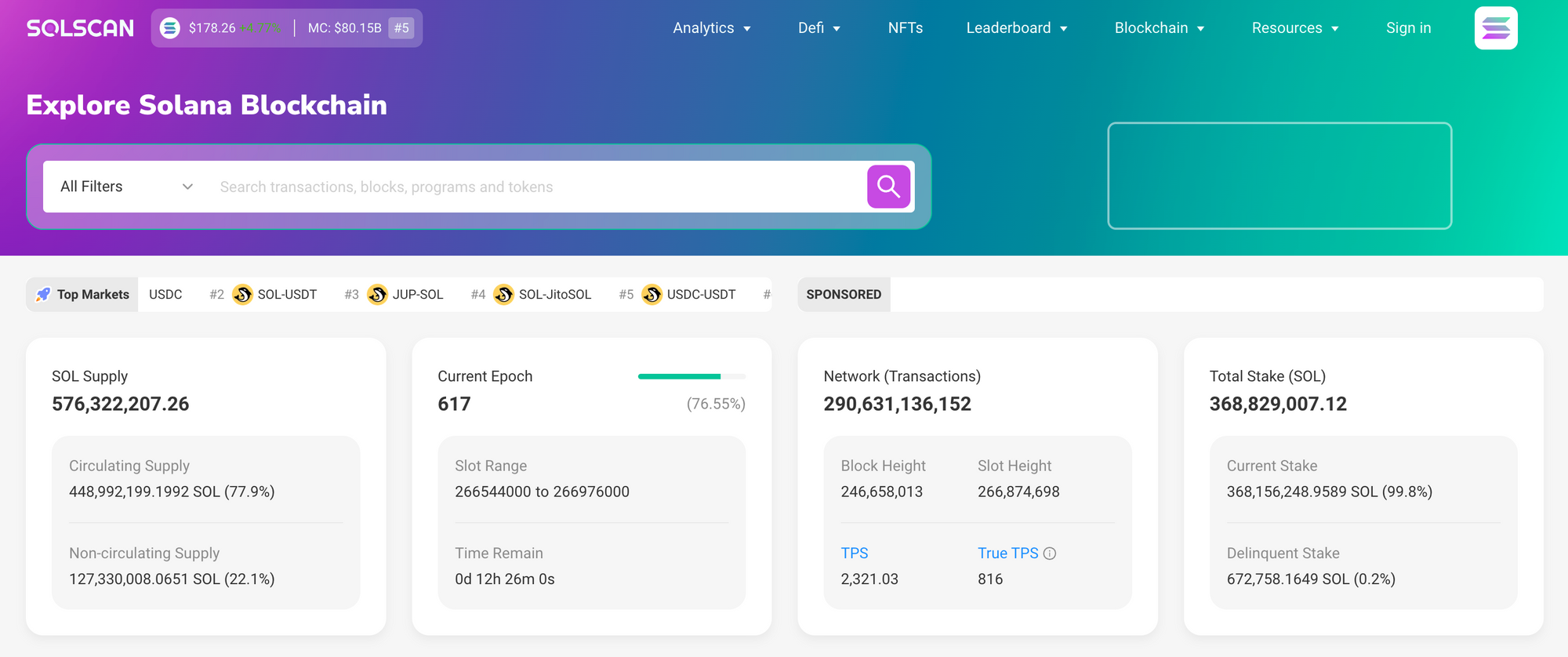
One I recommend checking out is solscan.
I’ve used it to trace token mints, inspect NFT metadata transactions, and follow program upgrade authority changes.
I’ll be honest—it’s not perfect.
But it often gives the right balance of speed, depth, and readability.
What to look for in a Solana explorer
Short answer: clarity.
Medium answer: clarity plus actionable detail.
Longer thought: an explorer should surface the transaction timeline, show which instructions executed, highlight cross-program invocations, and expose the raw logs for anyone who wants to dig into the exact runtime output, because without that you can’t tell whether a swap succeeded or partially failed in a complex sequence.
Here are the practical things I check every time.
Transaction latency and finality indicators.
Program instruction breakdown and CPI chain.
Token and account history, with filters to hone in on specific mints.
Readable error messages and raw logs.
Explorer-provided analytics like volume, fee trends, and top accounts are nice too—especially when you’re vetting a new DEX or lending protocol.
Something felt off about some explorers early on—they’d show a pretty UI but hide logs behind extra clicks.
My advice: prefer tools that put logs and instruction data front and center.
Also look for rich token metadata support, because NFT projects often store crucial info in on-chain metadata (or off-chain URIs that you need to resolve).
If an explorer can fetch and display that seamlessly, it’s a win.
Now, a small technical aside (oh, and by the way…): Solana’s parallelization means transactions can touch many accounts simultaneously.
That complexity means simple “from/to” views are sometimes misleading.
You must understand which accounts were mutable, which were signers, and how rent-exemption affected balance changes.
For deep audits, ledger export or raw RPC access is still needed, but an explorer translates raw data into a story you can follow.
One useful workflow I use is:
1) paste the tx hash,
2) inspect the instruction list,
3) check token transfers,
4) read program logs, and
5) if necessary, pull the account state from the explorer or via RPC.
It sounds basic.
But when you’re troubleshooting a bug or vetting a contract, that sequence saves hours.
Also—tiny tip—watch out for duplicate transactions during mempool congestion; explorers sometimes show multiple pending attempts side-by-side.
I’ll be candid: some parts of this are messy.
There are edge cases where explorers disagree on the interpretation of log output.
On the other hand, when multiple explorers converge on the same conclusion, that’s reassuring.
My instinct says trust patterns, not a single data point.
Common use cases and how explorers help
Debugging dev deployments.
You see instruction errors and quickly identify which account caused the failure.
User support for dapps.
Instead of asking a user for a vague timestamp, you ask for the tx hash and walk them through the exact steps.
Security audits.
Explorers let auditors cross-check program upgrades and authority transfers historically.
Market research.
Analytics surfaces which tokens are moving, where liquidity concentrates, and who the big players are.
Another thing: explorers are educational.
When I teach newcomers, I make them read logs and interpret instructions.
It demystifies the chain.
People stop treating transactions like black boxes and start understanding the state transitions that actually matter.
But there’s risk.
A pretty UI can lull you into complacency.
Don’t rely solely on one view.
Cross-check on-chain data, read the raw logs, and if a large transfer or upgrade happens, consider cloning the relevant account state to a local node for deeper inspection.
FAQ
How is a Solana explorer different from an RPC node?
An RPC node serves raw data and endpoints; an explorer organizes that data into human-readable artifacts like instruction lists, token histories, and analytics dashboards.
The explorer queries RPCs (and sometimes indexed databases) to build richer views, which is why explorers often feel faster and more user-friendly for browsing transactions.
Can explorers show me program logs for failed transactions?
Yes. Most good explorers surface program logs and error traces right in the transaction page, which is crucial for debugging.
If logs are missing, sometimes you need to check the node’s log retention or use a different RPC provider.
Which explorer should I try first?
Try a couple.
Personally I reach for tools like the one linked above for quick lookups and then switch to another indexer or direct RPC for cross-checks.
I’m biased, but having two sources is a simple way to reduce surprise.