
Why I Trust — and Still Question — Browser Extension Wallets: A Deep Dive into Rabby
Okay, so check this out—browser extension wallets changed how I move crypto around. Wow! They make on-chain life fast and absurdly convenient. My instinct said this was the future the first time I clicked “connect” at a DeFi dApp and it just worked. Initially I thought convenience would beat security every time, but then I spent a day auditing my own setup and learned some messy truths.
Here’s the thing. Seriously? Browser extensions live inside a browser that also loads shady ads and sometimes very dubious JavaScript. Short version: attack surface is real. On one hand extensions give UX wins that mobile wallets struggle to match. Though actually, extensions also inherit browser weaknesses that you can’t just patch away with a prettier UI.
I’ve used several wallets as a daily driver. Hmm… MetaMask, a few hardware combos, and lately Rabby for specific tasks. Something felt off about the default behaviors in many wallets. My first impression was “safe enough for small trades” and that turned into “nope, not without better heuristics.” On balance, what I want is a wallet that reduces mistakes without requiring me to be constantly vigilant.
What bugs me about most extension wallets is permission creep. Really? A dApp requesting full account access for a simple read-only action still happens. That part annoys me. I like that Rabby has more granular interaction models (I’m biased, but that UX helped me avoid a bad approval once). Actually, wait—let me rephrase that: no wallet is perfect, but some reduce cognitive load more than others.
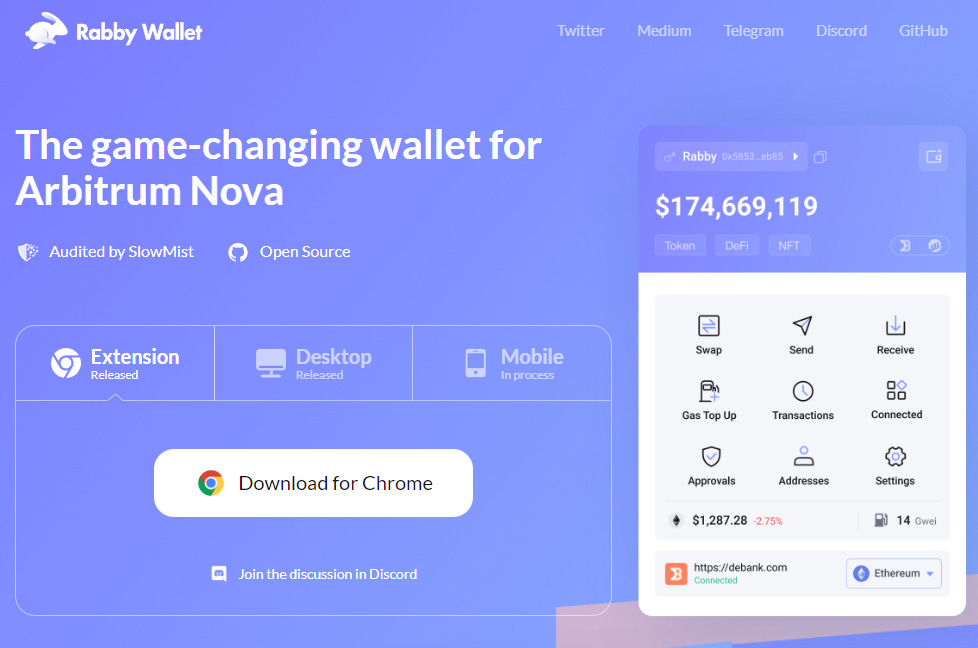
How extension wallets fail, and how Rabby addresses those failures
Short story: mistakes come from two places—user error and permission design. Here’s the rough math: small UX friction plus ambiguous messages equals very bad approvals. Whoa! For users this often looks like approving token allowances without checking decimals or not noticing a high gas fee. My gut told me that defaults matter more than tutorials, and testing confirmed it.
Rabby introduces a few guardrails that I found genuinely useful. It flags suspicious approvals and groups similar permissions so you can revoke them quickly. These are medium-length design choices, but they change behavior: people click less recklessly when the interface makes the risk visible. At scale, that reduces exploited allowances and phishing vectors.
On a technical note, Rabby separates account management and dApp connections more explicitly than some incumbents. This means your main account isn’t automatically exposed when a website asks for a simple signature. Longer technical explanation: by decoupling, Rabby forces the user to make a deliberate choice about which account to use, and it surfaces contextual warnings about cross-chain swaps that would otherwise be invisible in a crowded UI.
I’m not 100% sure about every internal telemetry choice they make (they’re not fully open about all heuristics), but the observable product behavior aligned with safer outcomes in my own tests. That said, keep in mind I did manual testing on specific flows—your mileage may vary, and I had to simulate some edge cases that real attackers would optimize for.
Trap example: unlimited token approvals. Short sentence. Many wallets still default to “infinite” approvals that let a contract spend your tokens forever. Really? That policy alone has burned users repeatedly. Rabby gives clearer affordances around allowance size and expiry. On the other hand, this is a UX-and-education problem as much as an engineering one.
Here’s a practical tip that saved me money: always use a dedicated account for high-risk DeFi interactions. My workflow now has separated accounts for trading, staking, and random airdrop clicks (oh, and by the way… I keep gas-heavy transactions on an account I check less often). This reduces blast radius if a private key or approval is compromised.
Security is a layered game. Short. You need a hardware wallet for large balances. You need compartmentalization for everyday use. And you need smart UX to limit mistakes during impulsive trades. On top, you want a wallet that makes revocations painless, because people rarely do the hard work of cleaning approvals unless it’s simple.
If you want to try what I used for the behavior and protection features I describe, here’s a helpful place to start: rabby wallet download. My recommendation is pragmatic—not promotional—and I still keep a hardware wallet for my main holdings.
Okay, let’s talk threat models. Hmm… attackers can be script kiddies, clever social engineers, or sophisticated contract-level exploiters. Initially I lumped them together. Then I realized each requires different defenses. Script kiddies are blocked by basic UX clarity. Social engineers are mitigated by confirmations and provenance checks. Contract exploiters demand deeper protocol-level understanding and sometimes offline verification.
On-chain risk isn’t only about signing a transaction. It includes signing permits, off-chain messages, and approving token contracts that later get upgraded. Longer thought: you must assume that an approval is not just an approval but a long-term contract with evolving implications, and your wallet should make that temporal risk explicit by showing expiry or suggesting limited allowances.
Here’s another thing that bugs me: too many “secure” features are hidden behind settings labeled with technical jargon. That drives users to leave defaults and increases risk. Users should not need an engineering degree to keep assets safe. Wallet teams that invest in plain-language prompts and contextual help will reduce losses. I’m biased toward UX-first security, and yes, that sometimes conflicts with purist cryptography-only approaches.
FAQ
Is a browser extension wallet safe enough for everyday DeFi?
Short answer: for small, frequent trades, yes—if you follow compartmentalization and use wallets with strong UX guards. Medium answer: use separate accounts for different risk levels and pair the extension with a hardware wallet for large holdings. Longer guidance: assume browsers can be compromised, so limit approvals, check contract addresses, and make revocation a routine task; no single layer is sufficient alone.
Should I always use hardware wallets instead of extension wallets?
Not necessarily. Hardware wallets are best for custody and high-value transactions. Extensions are better for convenience and speed during active trading. Combine both when possible—use the extension for low-value actions and the hardware wallet for signing major transfers. My practice: keep a small hot balance and lock the rest away.